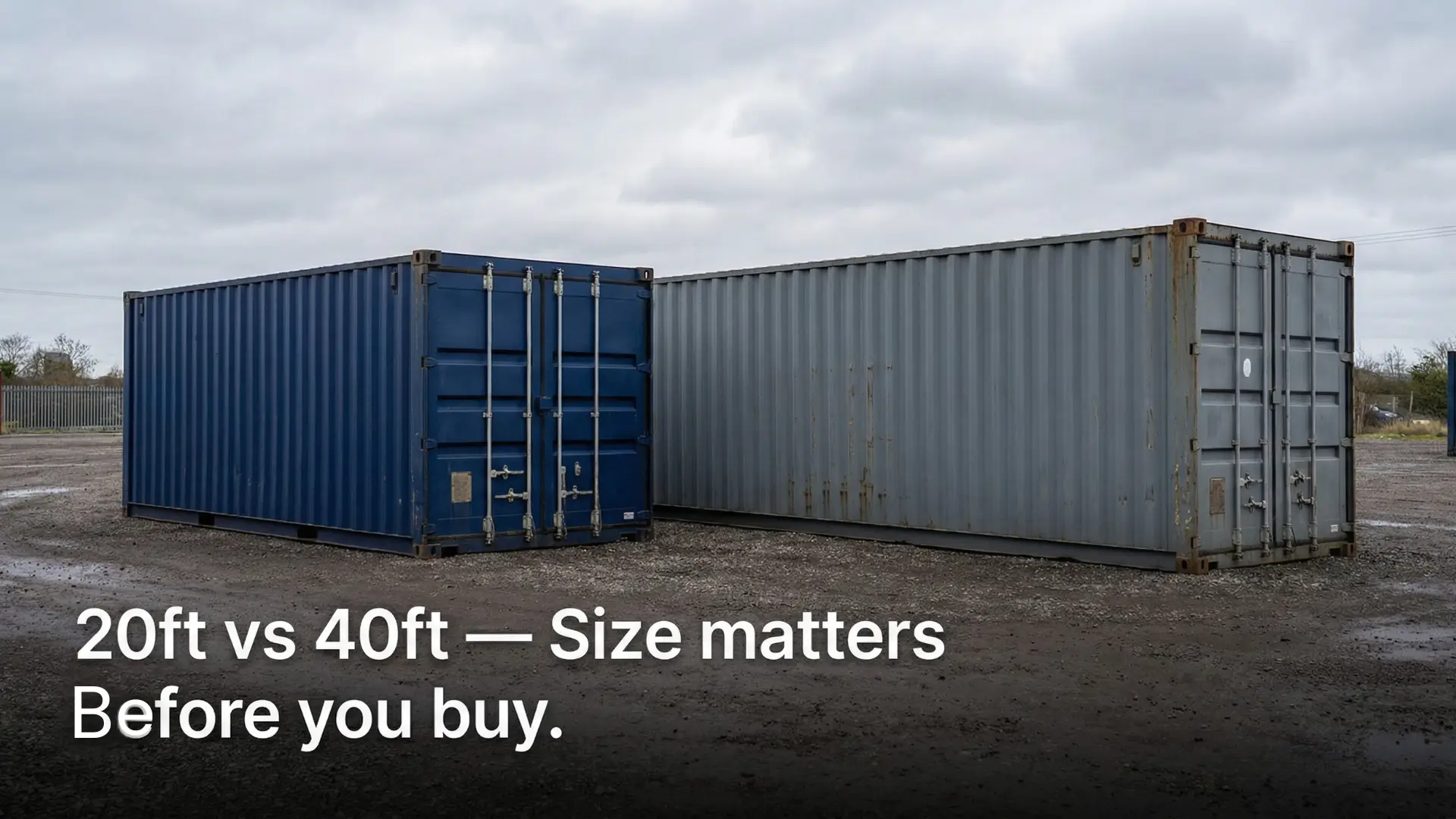
The right shipping container depends on what you’re actually using it for. That sounds obvious, but you’d be surprised how many people skip straight to browsing sizes without thinking through the basics first.
Size, condition, and intended use, those three things tend to determine whether you end up with a container that works or one that doesn’t.
This guide to buying a shipping container covers all of it, whether you’re after a 20ft shipping container for a residential project or a 40ft container for commercial freight transport.
Key Takeaways:
- 20ft and 40ft are the most commonly used containers for storage and freight shipping in the UK.
- High cube containers stand a foot taller than standard containers — worth considering if you’re storing oversized items.
- Choosing a container that’s too small can lead to overloading. Too large, and you’re wasting money on storage space you don’t need.
- Always check container doors, flooring, and walls before buying — whether it’s a new or used container.
Why Choosing the Right Container Size Matters?
A container that’s too small can lead to cramped loading, possible damage, or the hassle of renting a second unit. Too large and you’re paying for empty air. It’s important to assess the volume of items you plan to store before you start comparing container options.
It’s also important to factor in future use. A right size shipping container isn’t just about today’s inventory. If your storage needs might grow, sizing up slightly tends to be cheaper than sourcing a second container later.
Shipping Container Sizes and Types: What’s Available?
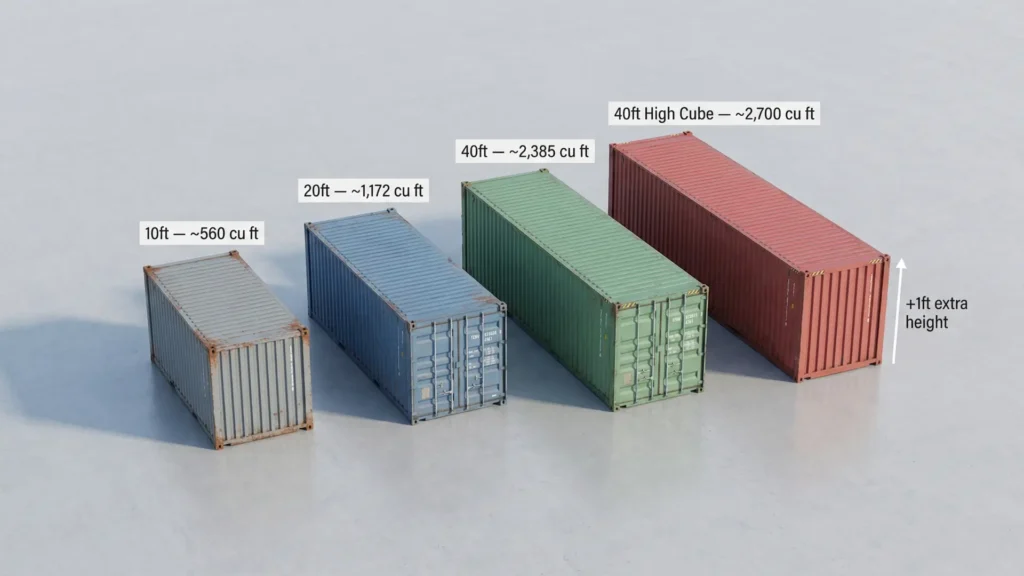
| Size | Dimensions | Capacity | Typical Use |
|---|---|---|---|
| 10ft | 10' × 8' × 8'6" | ~560 cu ft | Garden sheds, site offices |
| 20ft | 20' × 8' × 8'6" | ~1,172 cu ft | General storage, shipping goods |
| 40ft | 40' × 8' × 8'6" | ~2,385 cu ft | Warehouse stock, freight |
| 40ft HC | 40' × 8' × 9'6" | ~2,700 cu ft | Oversized cargo, conversions |
Need something bigger? A 40ft container gives you roughly double the volume, which makes it a solid choice for business storage or large-scale freight transport. And if you’re dealing with tall items — machinery, racking systems, that sort of thing — a high cube container is a foot taller than standard containers at 9’6”. That extra height makes the difference between things fitting and things not fitting at all.
Specialist Container Types Worth Considering
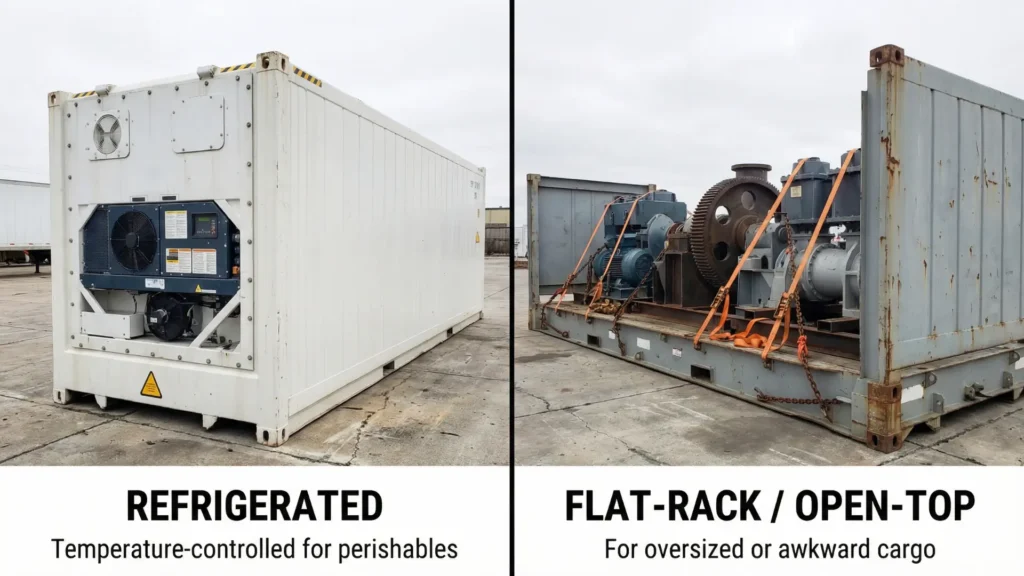
- Refrigerated containers are temperature-controlled, making them essential for perishable goods, pharmaceuticals, or anything with a short shelf life.
- Tunnel containers have container doors on both ends. Loading and unloading from either side is far more practical on busy sites or in a warehouse setup.
- Open-top and flat-rack containers handle oversized cargo that won’t fit through standard doors — useful for heavy machinery or awkwardly shaped equipment.
New vs. Used: How to Choose the Right Shipping Container to Buy

One-trip containers (sometimes called “new”) have made a single voyage from the manufacturer. They’re structurally sound, free from heavy rust, and look clean. If you need something for a conversion project or CSC-certified export, this is typically the better route.
A used container is the more cost-effective option. These tend to work well for general storage, construction sites, or anywhere cosmetics aren’t a concern. Just keep in mind that used containers come in various grades — from wind-and-watertight to cargo-worthy — so always ask about size and condition before you commit.
If the price gap between new and used is fairly small, a one-trip container can be the smarter long-term investment. Less maintenance, fewer surprises down the line.
Expert Advice: What to Check Before You Buy

Whether you’re looking at new and used shipping containers, a few quick checks go a long way:
- Container doors — open and close them yourself. They should swing freely and seal tight. Stiff or misaligned doors can suggest frame damage.
- Flooring — press down on the plywood floor and look for soft spots, rot, or water staining. Common in older used containers.
- Walls and roof — check for rust, dents, and any light coming through. A structurally sound container shouldn’t have holes or visible warping.
- Weight limits — every container has a maximum payload. Overloading a container isn’t just a warranty issue; it’s a genuine safety risk during transport.
Not sure what kind of container or what size container fits your situation? Blue Fin International Shipping offers a wide range of containers with honest guidance to help you make an informed decision.
FAQ: Choosing the Right Shipping Container
What shipping container do I need for storage?
What’s the difference between 20ft and 40ft containers?
How do I choose the right shipping container size?
Where can I buy a shipping container in the UK?
Look for a supplier with transparent pricing, proper inspections, and reliable delivery. Blue Fin International Shipping supplies quality-inspected containers across Greater London and nationwide — new and used, with expert advice at every step.