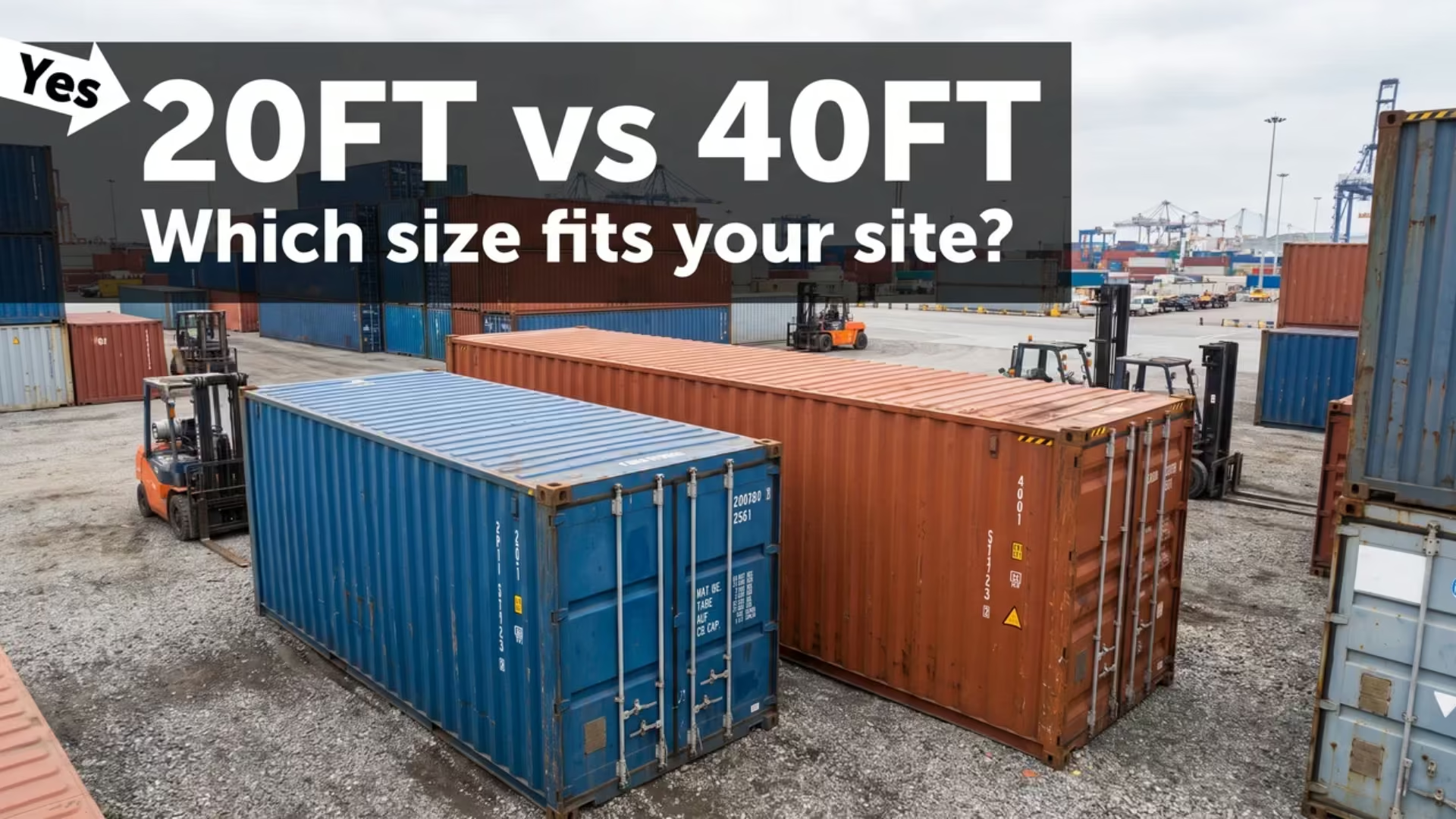
A 20ft shipping container suits tight sites, single-item storage and smaller loads. A 40ft container, or its taller 40ft high cube version, suits bulk cargo, full house moves and businesses that need serious storage capacity. Beyond that basic split, the right call comes down to your available space, your budget and what you’re actually putting inside it.
If you need a practical storage solution for a construction site, business premises or smaller property, explore our 20ft shipping containers for sale to compare available sizes, conditions and specifications.
Key Takeaways:
- 20ft containers measure roughly 6.06m long and hold about 33 cubic metres, ideal for smaller sites and lighter loads.
- 40ft containers run about 12.19m long, roughly double the length and cargo capacity of a 20ft unit.
- 40ft high cube units add an extra 30cm of internal height, useful for bulky or stacked cargo.
- Weight limits differ too. A 20ft container carries less total payload than a 40ft, even though its steel shell weighs less empty.
- Cost per cubic metre usually favours the 40ft, since you're paying less for storage space per square metre than with two 20ft units.

20ft vs 40ft Shipping Container Dimensions
Shipping container dimensions follow an ISO standard, so a 20ft or 40ft container will measure the same whether you’re buying from a UK supplier or shipping cargo from overseas. That consistency is exactly why these two sizes became the most common shipping container sizes on the market, and the backbone of global freight in the first place.
A standard 20ft container comes in at 6.06m external length, 2.44m width and 2.59m height. Its 40ft sibling stretches to 12.19m long, twice the length, while keeping the same width and standard height. Internally, you lose a little to wall thickness on both, which is why suppliers quote internal dimensions separately.
Choosing between a 20ft and 40ft unit depends on more than length alone. Our shipping container size guide explains how dimensions, available site space and storage requirements influence your decision.
| Spec | 20ft Container | 40ft Container | 40ft High Cube |
|---|---|---|---|
| External length | 6.06m (20ft) | 12.19m (40ft) | 12.19m (40ft) |
| External width | 2.44m (8ft) | 2.44m (8ft) | 2.44m (8ft) |
| External height | 2.59m (8ft 6in) | 2.59m (8ft 6in) | 2.90m (9ft 6in) |
| Internal length | 5.90m | 12.03m | 12.03m |
| Internal height | 2.39m | 2.39m | 2.69m |
| Cubic capacity | ~33 cbm | ~67 cbm | ~76 cbm |
Internal height on a standard unit sits at 2.39m regardless of length. Once you step up to a high cube container, that figure climbs to around 2.69m internally, which matters more than people expect once you’re stacking pallets or fitting taller equipment inside.
If your cargo includes tall equipment, stacked goods or bulky items, read our guide to 20ft shipping container dimensions and high cube options to understand how the extra internal height can help.
Container Weights and Payload Capacity
| Spec | 20ft Container | 40ft Container |
|---|---|---|
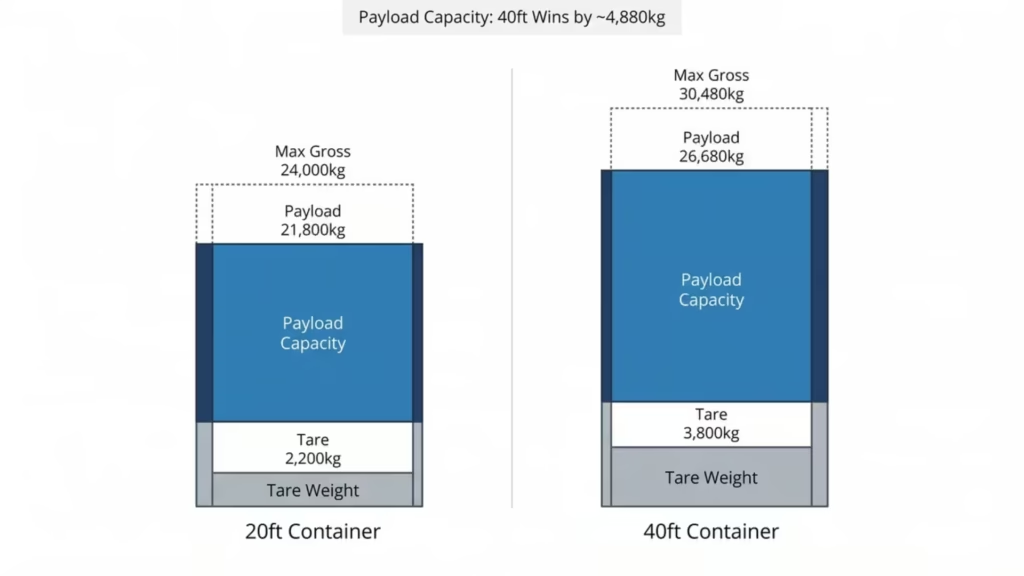
| Tare weight (empty) | ~2,200 kg | ~3,800 kg |
| Max gross weight | ~24,000 kg | ~30,480 kg |
| Payload capacity | ~21,800 kg | ~26,680 kg |
A 40ft container weighs more empty than a 20ft, largely down to the extra steel across double the length. But its payload capacity still comes out well ahead, so for pure weight of cargo per container, the 40ft wins on efficiency even after accounting for its own tare weight.
For larger storage requirements or higher cargo volumes, our 40ft shipping containers offer approximately twice the internal volume of a standard 20ft container.
Rule of thumb: a 40ft container doesn't just hold double the volume of a 20ft, it holds slightly more than double once you compare payload capacity against tare weight.

40ft High Cube Containers Explained
That extra height doesn’t sound like much on paper. In practice, it’s the difference between fitting a third layer of pallets or not, or having enough headroom to walk comfortably inside a converted storage unit. Freight forwarders lean on high cube units specifically when cargo volume matters more than weight, since most standard containers hit their cubic limit before they hit their weight limit anyway.
If your cargo is bulky rather than dense, packaging materials, insulation, textiles or furniture, a high cube container often makes better use of the space you’re already paying for.
How Much Does a 20ft or 40ft Container Cost?
That’s the calculation worth doing before you buy. Two 20ft containers will usually cost more combined than one 40ft, for roughly the same total capacity, plus you’re managing two units instead of one on-site. For businesses buying purely for storage capacity rather than shipment, that cost-per-cubic-metre logic tends to settle the decision on its own. If your storage needs are likely to grow, it’s often worth buying a 20ft and 40ft container as a pair rather than upgrading later.

Storage Capacity, Cargo and Pallet Fit
- 20ft container: suited to a single pallet run, smaller freight shipments, or site storage where space on the ground is limited
- 40ft container: suited to full container load (FCL) freight, larger stock runs, or storage projects needing serious volume
- 40ft high cube: suited to bulky, lightweight cargo where cubic capacity runs out before the weight limit does

20ft or 40ft: Which Should You Buy?
If site access is tight, a driveway, a narrow yard, a residential delivery, a 20ft container is often the more practical choice to buy even before cost enters the conversation. Many homeowners use 20ft units specifically for this reason: they’re easier to manoeuvre on delivery and easier to reposition later if you change your mind about where it sits.
.
If you’re storing the contents of a house move, running a business that needs serious on-site storage, or shipping freight in bulk, a 40ft container tends to make more sense. You get double the capacity for a proportionally smaller jump in cost, and you’re only managing one delivery instead of two.
If neither size meets your requirements, browse our full range of shipping containers for sale in the UK to explore alternative sizes, conditions and configurations.
Still unsure? Blue Fin's range of container sizes is worth a browse before you commit, since seeing exact new and used stock side by side often makes the size decision more obvious than dimensions alone.