Most people storing household items or running a small business need a 20ft container, while larger projects, full house moves, or commercial stock tend to call for a 40ft container. The right size shipping container ultimately comes down to three things: how much you’re storing, how much space you have on site, and what you’re willing to spend.
If you’re still not sure which one fits your situation, this guide walks through the standard shipping container sizes available in the UK, their internal and external dimensions, and how to match a size to your actual storage needs.
If you’re still not sure which one fits your situation, this guide walks through the standard shipping container sizes available in the UK, their internal and external dimensions, and how to match a size to your actual storage needs.
Key Takeaways:
- 20ft containers offer around 1,160 cubic feet of space and suit most home storage, small business stock, or single-room moves.
- 40ft containers roughly double that capacity and work better for full house clearances, larger inventories, or construction sites.
- High cube containers add an extra foot of height (9ft 6in external) for taller or bulkier items.
- Standard container height across most sizes is 8ft 6in, with a width of 8ft as the industry standard.
- A 10ft container is a solid middle ground if a 20ft feels like overkill but you need more than a garden shed offers.
Standard Shipping Container Sizes Explained
Shipping containers were standardised decades ago so they could move easily between ships, lorries, and rail, a process known as containerization. That’s why, no matter where you buy from in the UK, you’ll find the same handful of sizes again and again.
The most common lengths are 10ft, 20ft, and 40ft, with 30ft units occasionally available for more specific jobs. Width and height stay largely fixed across the range. This consistency is actually useful for buyers: once you know the standard external dimensions of a 20ft container, you know roughly what to expect from any supplier’s 20ft container range, give or take small variations between manufacturers.
The most common lengths are 10ft, 20ft, and 40ft, with 30ft units occasionally available for more specific jobs. Width and height stay largely fixed across the range. This consistency is actually useful for buyers: once you know the standard external dimensions of a 20ft container, you know roughly what to expect from any supplier’s 20ft container range, give or take small variations between manufacturers.
Standard External and Internal Dimensions
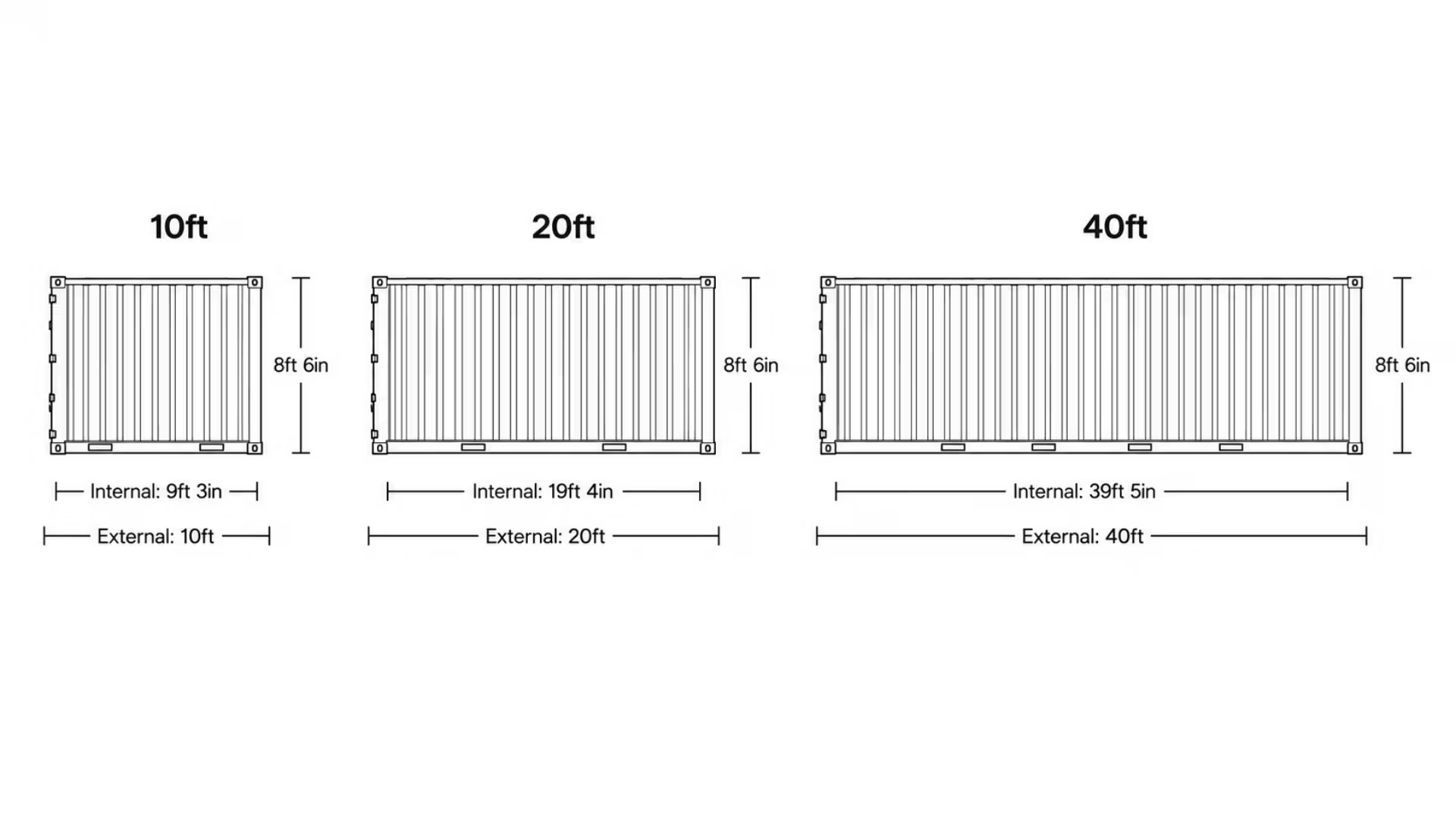
Here’s where the numbers actually matter, because external dimensions and internal dimensions aren’t the same thing. The external measurement is the container’s overall footprint. The internal dimension is what you actually have to work with once the steel walls are accounted for.
| Container Size | External Dimensions (L × W × H) | Internal Dimensions (Approx.) | Cubic Capacity |
|---|---|---|---|
| 10ft | 10ft × 8ft × 8ft 6in | 9ft 3in × 7ft 8in × 7ft 9in | ~560 cu. ft |
| 20ft | 20ft × 8ft × 8ft 6in | 19ft 4in × 7ft 8in × 7ft 9in | ~1,160 cu. ft |
| 40ft | 40ft × 8ft × 8ft 6in | 39ft 5in × 7ft 8in × 7ft 9in | ~2,350 cu. ft |
The standard height across 10ft, 20ft, and 40ft containers is 8ft 6in, and standard width sits at 8ft. If you’ve seen container dimensions quoted slightly differently elsewhere, that’s usually down to wall thickness varying by manufacturer, not a different size category altogether.
20ft vs 40ft: Which Do You Actually Need?
This is the comparison most people land on, since 20ft and 40ft containers cover the vast majority of UK use cases.
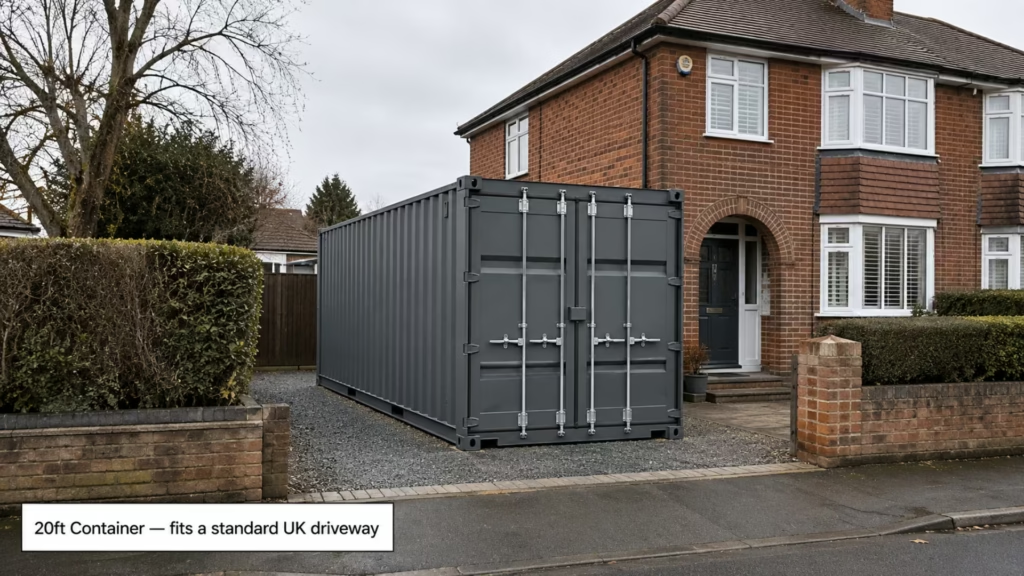
A 20ft shipping container fits comfortably into a standard driveway or garden, and its 1,160 cubic feet of cubic capacity is enough for:
- The contents of a 2-3 bedroom house
- Stock for a small retail or trade business
- Tools, equipment, and materials for a construction site
- General self storage for someone decluttering or between house moves
A 40ft container, by comparison, suits situations where space simply isn’t the constraint, budget and storage volume are. Think full house clearances, larger commercial inventory, or container conversions where you need that extra length to work with. It’s not just a bigger box. It changes what’s realistically possible.
"If you're hiring a 20ft or 40ft container and aren't sure which to pick, it usually pays to size up slightly rather than down. Running out of room halfway through a move is far more frustrating than having a bit of spare space."
Standard vs High Cube Containers
Once you’ve settled on a length, there’s one more decision: standard or high cube.
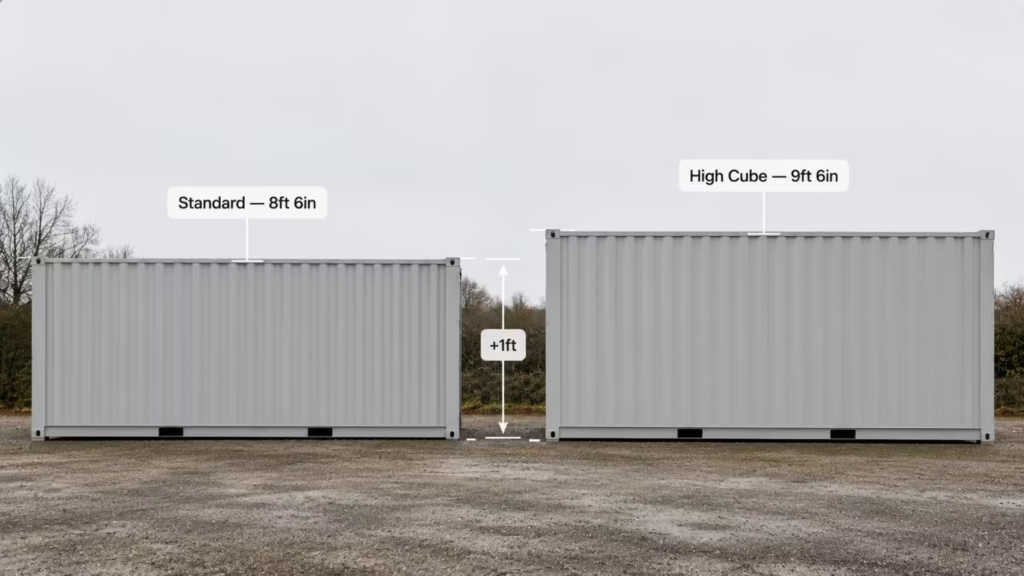
Standard containers, as covered above, come in at 8ft 6in tall. High cube containers add an extra foot, bringing external height to 9ft 6in. That extra space doesn’t sound like much on paper, but it makes a real difference if you’re storing furniture, stacking pallets, or converting a container into a workspace or site office. High cube shipping containers are available in 20ft and 40ft lengths, so you’re not sacrificing length to get the height.
Standard containers, as covered above, come in at 8ft 6in tall. High cube containers add an extra foot, bringing external height to 9ft 6in. That extra space doesn’t sound like much on paper, but it makes a real difference if you’re storing furniture, stacking pallets, or converting a container into a workspace or site office. High cube shipping containers are available in 20ft and 40ft lengths, so you’re not sacrificing length to get the height.
How to Choose the Right Shipping Container Size
With the dimensions guide out of the way, here’s how to actually land on the right size container for your situation.
- Estimate your storage needs first. Walk through what you’re storing (or moving) and roughly how much floor space it takes up now. This is more reliable than guessing at container size in the abstract.
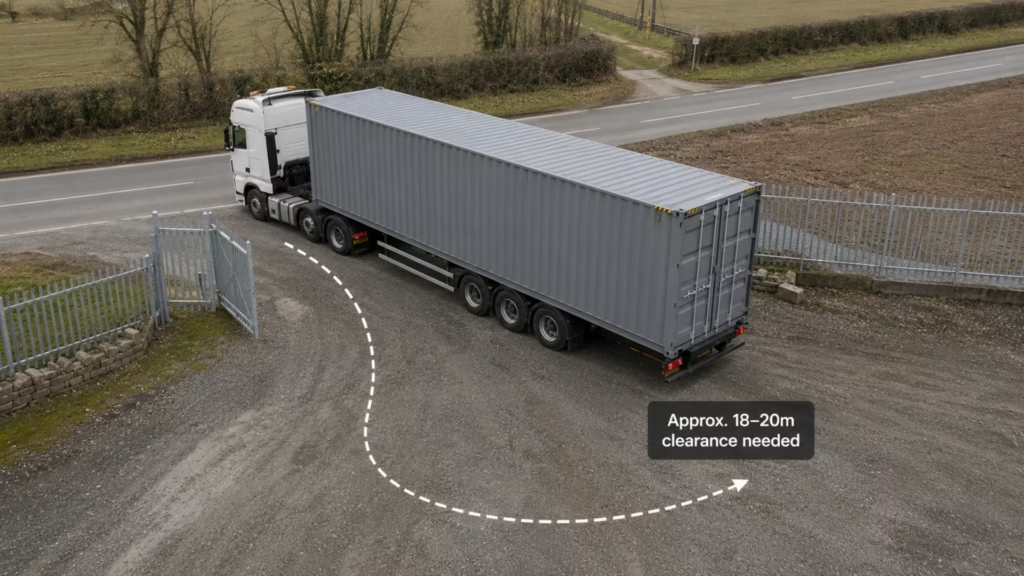
- Check your site. Measure the space where the container will sit, including the access route for delivery. A 40ft container needs considerably more turning room than a 20ft.
- Think about future use. If this is a one-off job, size to fit. If it’s ongoing storage for a growing business, it’s often worth choosing the larger container now rather than upgrading later.
- Factor in budget. Larger containers cost more to buy or hire, so weigh the cost difference against how much extra space you’ll genuinely use. Our guide on shipping container prices breaks down what affects cost across sizes.
- Ask about bespoke options. If none of the standard sizes fit your project exactly, some suppliers, including Blue Fin International Shipping, can arrange a bespoke container modified to your specific requirements.
There’s no single “perfect container” for everyone. The right size shipping container is simply the one that matches what you’re storing without leaving you short on space or paying for room you’ll never use.
Frequently Asked Questions
What can you fit inside a 20ft container?
A 20ft container holds roughly the contents of a 2-3 bedroom house, or enough stock and equipment for most small businesses and construction sites.
What are the standard shipping container sizes?
The most common standard sizes in the UK are 10ft, 20ft, and 40ft, with 30ft units available in some cases.
What's the difference between standard and high cube containers?
Standard containers stand 8ft 6in tall. High cube containers add an extra foot, reaching 9ft 6in, giving more vertical storage space.
How wide is a shipping container?
Industry standard width across nearly all container sizes is 8ft.
Do I need planning permission for a 20ft container?
It depends on how long the container will stay on site and your local council’s rules. It’s worth checking with your council before delivery, particularly for permanent placements.