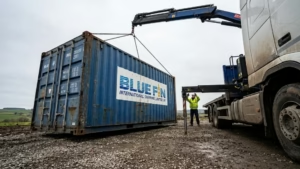
A shipping container is a large, standardised steel box built to carry cargo across multiple modes of transport – sea, rail, and road – without ever needing to be unpacked in between.
They’re the foundational unit of modern freight transport and international trade, and chances are, almost everything in your home passed through one at some point.
Most containers conform to standards set by the International Organization for Standardization (ISO), which is why they stack perfectly on a vessel, slide onto a flatbed truck, and load onto a train without modification. That interoperability is the whole point.
Most containers conform to standards set by the International Organization for Standardization (ISO), which is why they stack perfectly on a vessel, slide onto a flatbed truck, and load onto a train without modification. That interoperability is the whole point.
Key Takeaways:
- Shipping containers are made of weathering steel, built to survive years of exposure to the elements
- Standard sizes are 20ft and 40ft - the basis for the twenty-foot equivalent unit (TEU) used in global logistics
- Main types include standard, high cube, refrigerated (reefer), and tunnel containers
- Beyond freight, containers are widely used for storage, construction, and conversion projects
- New and used shipping containers are available across the UK for commercial and individual use
What Are Shipping Containers Made Of?
Shipping containers are made of steel — specifically a weathering grade known as Cor-Ten. It’s what allows them to resist rust and corrosion even when constantly exposed to saltwater, humidity, and temperature swings at sea.
The corrugated wall design isn’t decorative. Those ridges add structural rigidity, letting containers stack six or seven high without buckling. Floors are typically hardwood or bamboo, and the doors are fitted with rubber gaskets that keep water out — which is why containers used for storage are reliably weatherproof.
They’re also coated in industrial-grade paint, which adds another layer of protection and is one reason well-maintained units can last 25 years or more.
They’re also coated in industrial-grade paint, which adds another layer of protection and is one reason well-maintained units can last 25 years or more.
Standard Shipping Container Sizes
ISO guidelines dictate container dimensions so they can be loaded onto a vessel, transferred between transport modes, and stacked at port without issue. The standard sizes most people will encounter are:
- 20ft containers – Roughly 6 metres long and the origin of the twenty-foot equivalent unit (TEU), the standard measurement used in global shipping logistics. The most popular size for general storage and freight.
- 40ft containers – Double the capacity of a 20ft unit; the go-to choice for large shipments and high-volume cargo.
- High cube containers – Available in both 20ft and 40ft variants, with an additional foot of internal height (approximately 2.9m). Useful when cargo is bulky or tall, and popular for conversion projects where headroom matters.
Types of Shipping Containers
Not every container is built the same. Here’s a breakdown of the main types and what they’re suited for.
Standard Shipping Containers
The workhorse of global freight. Standard shipping containers handle the vast majority of goods moved in international shipping — from palletised food products to machinery and electronics. They’re cost-effective, widely available, and come in both new and used shipping conditions.
“Standard containers account for the bulk of intermodal containers in circulation globally — a testament to how well the design has held up since containerisation first took hold in the 1950s.”
When buying used, condition grades matter. Units are typically classified as cargo worthy or wind and watertight – and the difference between the two affects what you can use them for. Our blog on cargo worthy vs wind and watertight containers breaks this down in full.
Refrigerated Containers (Reefer Containers)
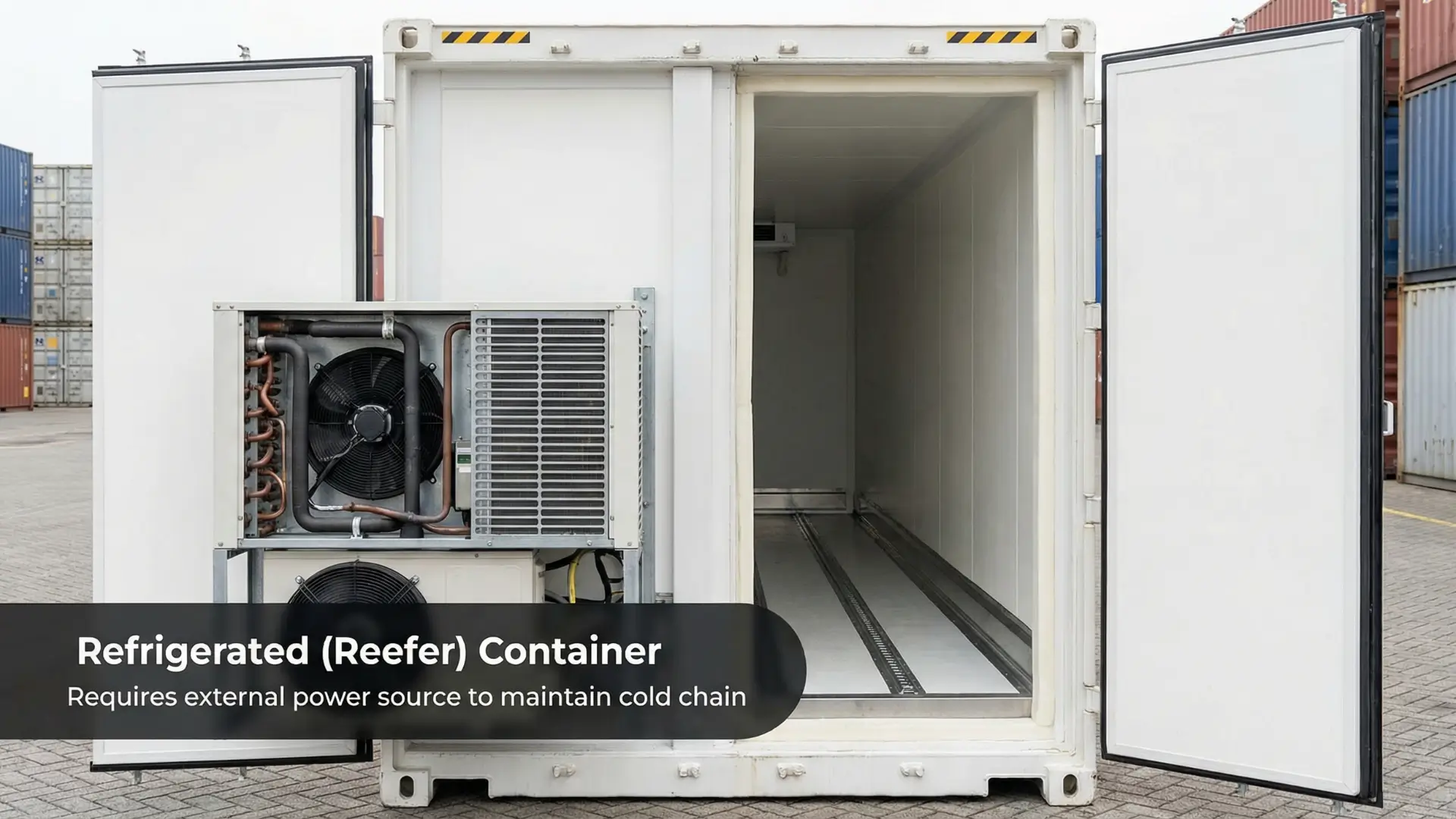
Reefer containers are insulated units with a built-in refrigeration system, designed to maintain a controlled temperature throughout transit. They’re the standard choice for shipping fruit, vegetables, dairy, seafood, and pharmaceutical goods where the cold chain can’t be broken.
Worth noting: the refrigeration unit requires a power source, so reefer containers used for on-site storage need to be connected to electricity to function properly.
Worth noting: the refrigeration unit requires a power source, so reefer containers used for on-site storage need to be connected to electricity to function properly.
High Cube Containers
High-cube containers offer that extra vertical clearance that standard containers can’t. They tend to be popular in e-commerce logistics, where goods are lightweight but take up considerable space, and in conversion projects where ceiling height makes the difference between a functional and impractical interior.
Tunnel Containers
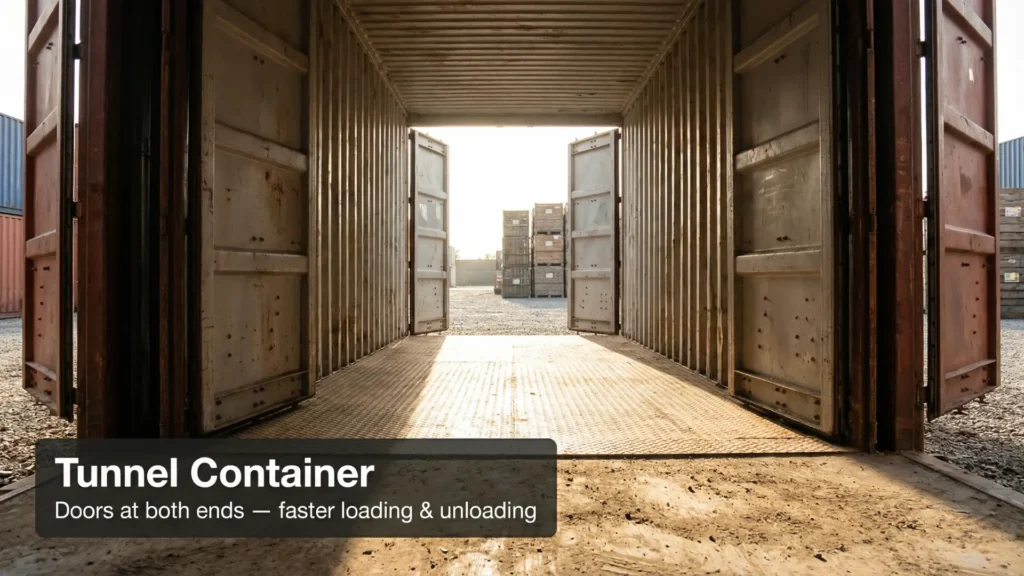
Tunnel containers have doors at both ends, which allows for drive-through loading and unloading. For high-turnover freight operations, that dual-access design can significantly speed up the container loading process — no need to shuffle cargo from one end to the other.
Open Top & Flat Rack Containers
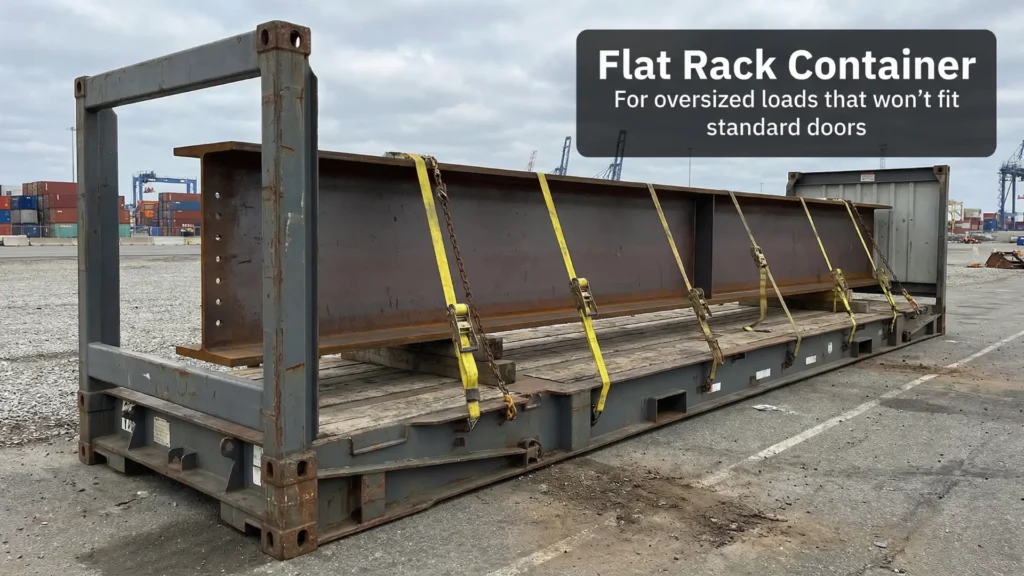
These are the specialised containers built for awkward or oversized loads – construction equipment, industrial machinery, timber. Cargo that simply won’t fit through a standard door. Open tops load from above; flat racks have no walls at all, just a reinforced floor and end frames.
What Are Shipping Containers Used For?
The use of shipping containers has expanded well beyond moving cargo across oceans. A few of the main applications:
Freight and cargo transport
At their core, intermodal containers are designed to facilitate the seamless movement of goods from one mode of transport to another. A container can leave a factory in Asia, board a vessel, transfer to rail, then truck, and arrive at a distribution centre without the contents ever being touched. That’s the efficiency intermodal shipping delivers.
Storage
Storage containers are a popular choice for businesses and construction sites that need secure, weatherproof on-site space. They’re easy to position, hard to break into, and typically don’t require planning permission for temporary placement.
Construction and conversion
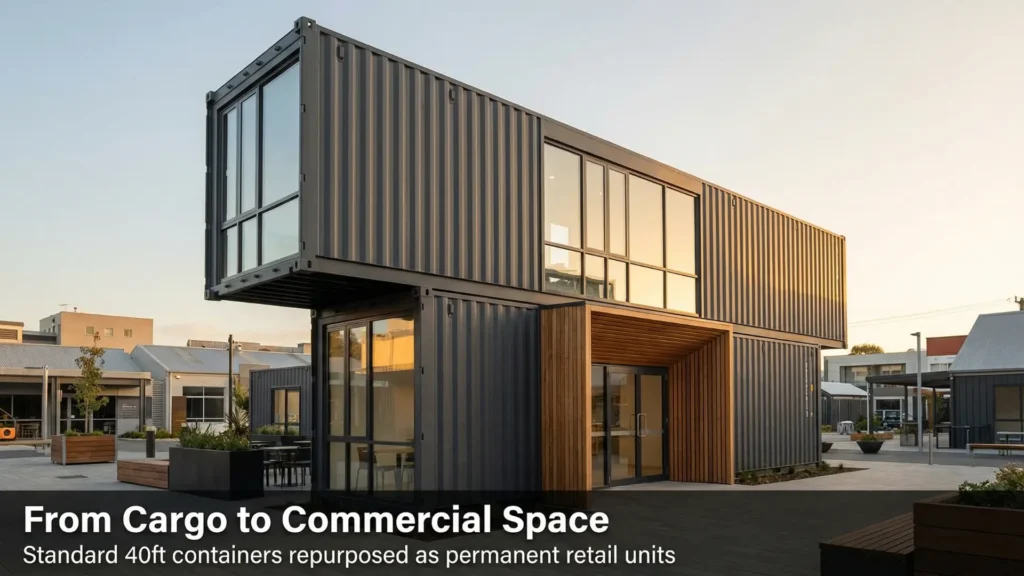
Container architecture has grown considerably in recent years. Homes, offices, pop-up retail units, and even schools have been built from shipping containers. Their standardised dimensions and structural strength make them surprisingly versatile as building components.
Frequently Asked Questions
What is considered a shipping container?
Any reusable, standardised steel unit designed to carry freight across intermodal transport networks. To qualify, it must conform to ISO dimensions and structural requirements.
Are shipping containers waterproof?
Yes — they’re built for maritime conditions. Sealed steel walls and rubber door gaskets keep water out effectively, which is also why they work so well for outdoor storage.
Can shipping containers be dismantled?
They can, though cutting equipment is required. Most retired containers are repurposed rather than scrapped, given how structurally sound they remain.
What are storage containers used for?
Beyond freight, they’re used for secure on-site storage, temporary warehousing, retail kiosks, workshops, and residential conversion.
How many shipping containers are there in the world?
Estimates vary, but it’s generally believed there are somewhere around 17 million shipping containers in active circulation globally.